Tuesday, August 5, 2014

Tuesday, 8/5 - The Last Day (of teaching) and Final Preparation

  • P&P
  • Schedule for Today
    • 8:15 – 8:30 Devotions
      8:35 – 9:25 Period 1
      9:25 – 9:40 Break
      9:45 – 10:35 Period 2
      10:40 – 11:30 Period 3
_______________________

HW: 
  • (2 and 3) Study for your final exam
    • Fairy Tales and their motifs 
    • Biblical plots, characters, and motifs
      • Genesis 1-4 
        • God - Made everything by speaking
        • Adam - First Man
        • Eve - First Whoa-man
        • The serpent - Destroyed everything by speaking
        • Cain - Adam and Eve's firstborn son who killed his younger brother Abel
        • Abel - Adam and Eve's second-born son who was killed by his older brother, Cain
      • David is anointed King of Israel
        • Samuel - Prophet of Israel who anointed David the second king
        • Saul - First King of Israel (who failed and was replaced by David)
        • Jesse - David's father (father of eight sons)
        • David - the eighth son of Jesse, second King of Israel, of whom Jesus was a descendant 
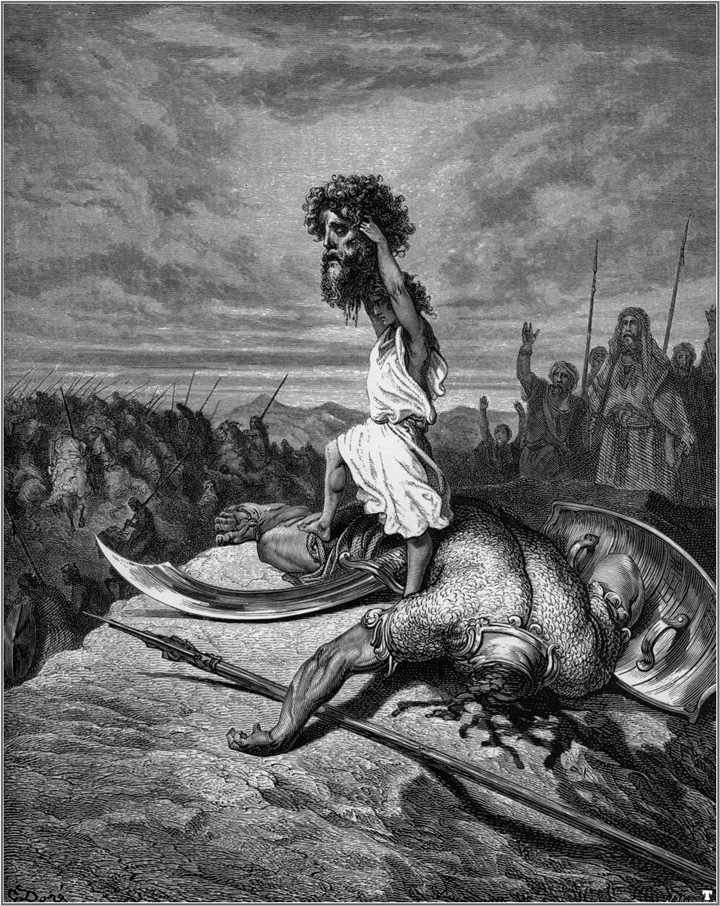
      • David defeats Goliath
        • Goliath - giant and champion of the Philistines (people at war with God's people, the Israelites)
      • David, Bathsheba, and Solomon
        • Bathsheba - Uriah's wife and woman whom David slept with
        • Uriah (the Hittite) - Bathsheba's husband and faithful soldier to David
        • Nathan (the Prophet) - confronts David with a story about a wicked rich man
        • Joab - David's general who had Uriah killed upon David's request
        • Solomon - David's second son who replaced the first child David lost (also the wisest King of Israel)
      • The Gospel of John (1, 18-21)   
        • The Word (Jesus)
        • John the Baptist - Jesus's cousin and prophet to Israel
        • Peter - Jesus's closest disciple who denied Him three times
        • Pilate - Roman ruler governing Israel when the Jews demanded that Jesus be crucified
        • Barabbas (Son of the Fathers) - the guilty man whom the Jews demanded be released and the innocent, spotless Lamb of God (Jesus) be killed
  • (Group 3 should also study only the Lit Terms below (not the original list) and also be ready for their poetry recitation)

Monday, August 4, 2014

Monday, 8/4 - Psalm 51 Context

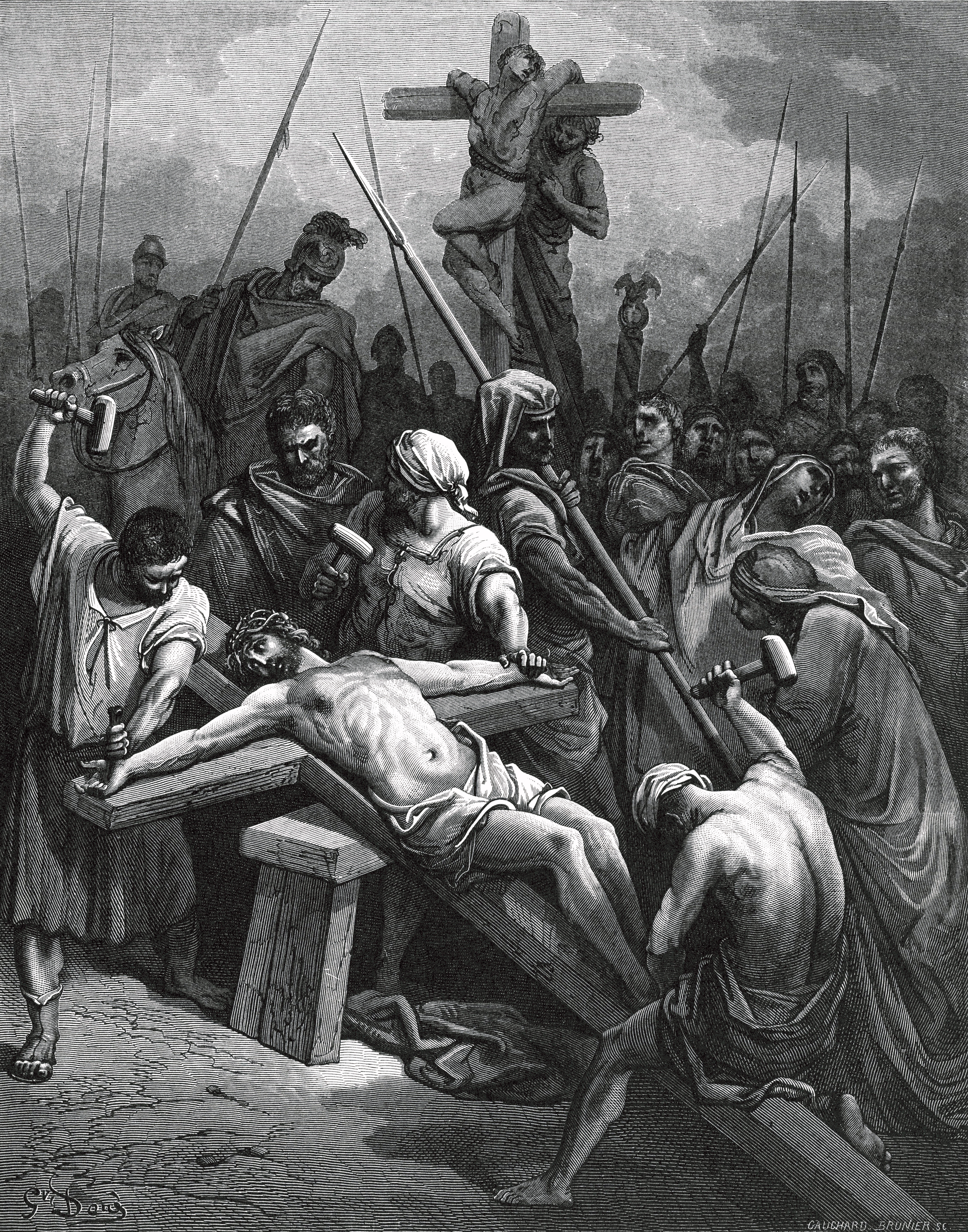
Jesus' enthronement (Gustave Dore)
  • P&P
___________________

HW: 
  • (1) ?
  • (2) ?
  • (3) Work on your poem

Thursday, July 31, 2014

Thursday and Friday, 7/31 - 8/1 - Biblical Overview

  • P&P
image
Adam and Eve are driven from the Garden of Eden
  • (Groups 2-3) Let's begin by reviewing the beginning of our story: Genesis 1-4 
    • Ch 1 - The Creation of the World
    • Ch 2 - Adam and Eve
    • Ch 3 - The Fall
    • Ch 4 - Cain and Abel
  • image
    Cain slays his brother, Abel
    Unfortunately, we don't have much time to go through many Bible stories, but we can take a look at David and Solomon, the most well-known Kings of Israel, from whom comes Jesus Christ, who is known as King of kings and Lord of lords. When Jesus spoke of himself He said, "Something greater than Solomon is here." This sounds pretty crazy if you ask me . . . unless it's true, which is crazier! So . . . let's meet these two kings who preceded their greater Son, Jesus.
  •  
    __________________________________
    HW: 
  • (3) Read the whole Bible (JUST KIDDING!)

Wednesday, July 30, 2014

Wednesday, 7/30 - And to Wrap Things up . . . The Bible

David and Goliath, Gustave Dore
Gustave Dore's David and Goliath (1866)
  • Prayer & Poetry
  • Group 3 
    • "Once upon a Time" by Nadine Gordimer
      • What fairy tale motifs does this story invert or parody? 
  • Now that we have covered Faerie Tales and their motifs rather extensively, let's learn where many of these tales derive their
    • themes  
      • the small warrior--or underdog--often triumphs over his giant foe with unexpected weapons)
    • motifs  
      • three times/days
      • good ultimately defeats evil
      • crossing the threshold), and  
    • characters . . . they find their origins in the Bible, which means, "the Book."
  • Let's begin by reviewing the beginning of our story: 

______________________________


HW: 
  • (1) Work on pronouncing "the third"
  • (2) None
  • (3) Read Genesis 1-4 and write down any motifs you observe

    Tuesday, July 29, 2014

    Tuesday, 7/29 - One More Fairy Tale?

    • P&P
    • Announcement: students will not go to the cafeteria but will return to the dorm after their last period; lunch will be provided on your field trip. 
    • "Aschenputtel (Cinderella)" motif homework check.
    _____________________

    HW: Take a break!

    Monday, July 28, 2014

    Monday, 7/28 - Cinder(ella)s and Ashe(nputtel)s!

    "Aschenputtel"
    • Prayer & Poetry
    • Review HW 
    Rackham's Ashenputtel
    Aschenputtel and her evil stepsisters - Arthur Rackham
    _________________________

    HW: 
    • (2-3) Make a list of as many fairy tale motifs as you can from "Aschenputtel." See if you can identify some new ones if you can!

    Sunday, July 27, 2014

    Fairy Tale and Biblical Motifs


      • motif
        • recurring object, structure, character type, phrase, or concept in a work and/or numerous works of art.
          • Fairy Tale Motifs:
            • i.e. the poor family, the weak father, the evil stepmother, the forest (unknown), enchantment (magic), destruction of evil, wedding, sympathetic animals, naive protagonist(s), etc. 
          • Biblical motifs:
            • i.e. creation-recreation, three days, seven days, the eighth, the garden, the serpent-dragon, the forbidden fruit (tree), banishment from the garden, brother-murder, breath of life, new creation
              • "In the beginning God [was the Word]" (found in Genesis and John)
              • Seventh Day of Rest: God rested on the seventh day after creating the world; Jesus "rested" (died) after re-creating the world just as the sixth day was ending
              • Adam in the Garden (of Eden); Jesus in the Garden (of Gethsemane)
              • Serpent in the Garden; Judas and the soldiers in the garden
              • Forbidden fruit; Bathsheba; the cross
              • Brother-murder: Cain and Abel, David and Uriah, Jews and Jesus 
              • Breath of Life: God breathes on Adam; Jesus breathes on His disciples
              • New Creation: Eve from Adam's side; the Church from Jesus's side 

      Wednesday, July 23, 2014

      Wednesday, 7/23 - Kids Kickin' It (well, kickin' the bad guys)

      A Fairy (Arthur Rackham)
      • Prayer & Poetry
      • Read "Hansel and Gretel" and try to find and write down as many faerie tale motifs (recurring objects, concept, character type, or structure in a work) as you can.   
      • Here are some of the ones we discovered today in class that commonly appear in many faerie tales:
        • forest
        • poor family
        • evil stepmother
        • weak father
        • threshold (the line that separates the known and unknown worlds)
        • enchantment (magic . . . the gingerbread cottage)
        • special numbers (3 or 7)  
        • can you find some others???
      __________________________

      HW: 
      • (2-3) Read "Snow White" and find as many motifs as you can, writing down specific instances.

        Tuesday, July 22, 2014

        Tuesday, 7/22 - Faerie Tales

        • Prayer & Poetry
        • Western Ways - Midterm (Quiz)
        • When you finish your quiz today, we will begin our next section of readings . . . out of chronological order. While we have read some selections from the Greco-Roman strand of western tradition, we are going to save the Judeo-Christian strand for the last few days. Right now, we will look at faerie tales.
        _________________________________________

        HW: 
        • No HW ; )

        Monday, July 21, 2014

        Monday, 7/21 - Coming Home

        • P&P
        • Discuss HW
          • (2) Read "Troy" (based on Homer's Iliad)

            • Identify one important lesson
            • Which character do you like the most and why?
            • Which character do you like the least and why? 

          • (3) Read "Troy" (based on Homer's Iliad)

            • Identify one major theme developed in the story, and cite two examples in the text to support your point
            • Which character do you like the most and why?
            • Which character do you like the least and why?
        • Now let's finish our overview of Greek mythology with a quick reading of one of my favorites: The Odyssey
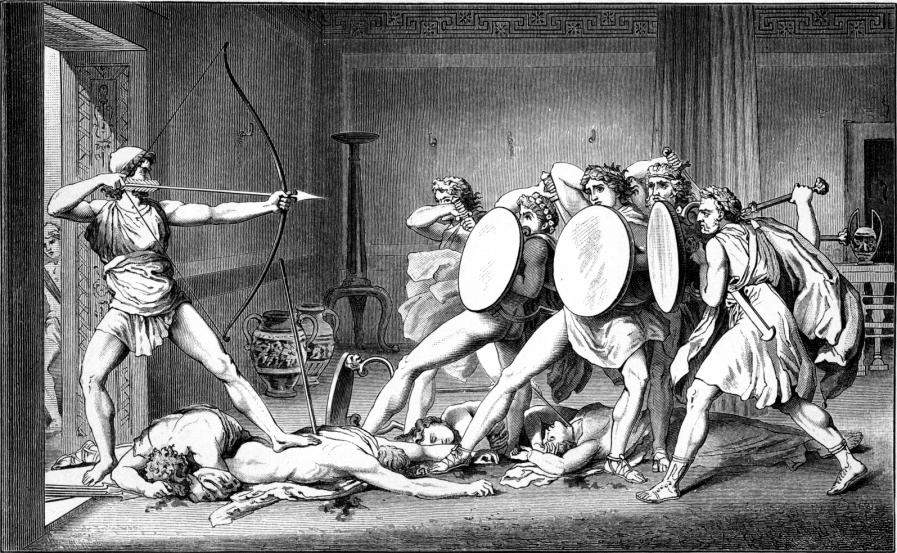
          • Odysseus returns home
          • Have you ever been stranded far from home—here in America?and it seemed like everything and everyone was conspiring against your return? Well, imagine trying to get home for ten years only to find a group of punks who were stealing your inheritance and trying to break up your family. How would you deal with them?
         HW: 
        • (2) Study your stories and poem (poetry recitation and quiz tomorrow). Know the characters, plots, and morals.
        • (3) Study your stories and lit terms (quiz tomorrow). Know the characters, plots, and themes.

        Friday, July 18, 2014

        Friday, 7/18 - All For a Woman

        • P&P
        • (3) Review Lit Terms
        • (2-3) Review HW
          • (2) Of the three myths we've read, which one do you think teaches the most important lesson for your life . . . why?
          • (3) Themes and collect love story
        •  Helen of Troy
          • Read as a class
            • (2) Identify an important moral
            • (3) Identify one theme
        _________________________________________
        HW: 
        • (1)
        • (2) Read "Troy" (based on Homer's Iliad)
          • Identify one important lesson
          • Which character do you like the most and why?
          • Which character do you like the least and why? 
        • (3) Read "Troy" (based on Homer's Iliad)
            • Identify one major theme developed in the story, and cite two examples in the text to support your point
            • Which character do you like the most and why?
            • Which character do you like the least and why? 

        Wednesday, July 16, 2014

        Wed, 7/16 - Theme and Moral

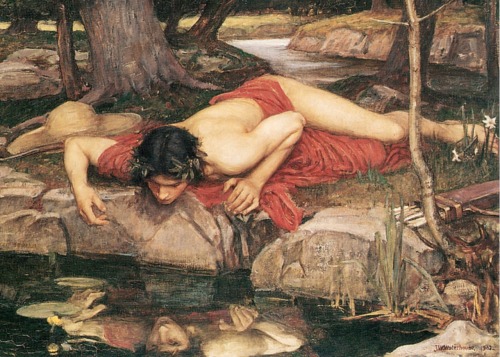
        A detail of Echo and Narcissus by John William Waterhouse (1903)
        • Prayer & Poetry
          • Today we are taking a look at the literary term known as theme. While closely related to moraltheme is a bit more nuanced, complex. A moral tells an audience (often a very young audience) how to live (e.g. don't tell lies, hard work eventually pays, etc.). A theme, however, is an author's view of some aspect of life. It's not a moral, but you can often extract, or pull, a moral out of it. Here's an example:
          • theme: "Young people who don't listen to their elders' wisdom often suffer disastrous consequences."
            • Notice that this is a basic insight into some aspect of life.
          • moral: young people should listen to their elders' wisdom.
            • Notice that this is an admonition, a command directed toward youth for their own good, to make them better people.
        • Additionally, a theme should be stated in a complete sentence. Here is an example of how to move from a subject, to a topic, to a sub-topic, and finally to a theme.
          • Subject: advice
            • what kind of advice? from whom?
          • Topic: advice of elders
            • advice of elders applied to whom?
          • Sub-topic: advice of elders for the youth
            • what about elders' advice and youth? Do young people often listen to it, or do they disregard it? What's the big deal about not listening to it?
          • Theme: "Youth who don't listen to their elders' wisdom often suffer disastrous consequences." 
            • Notice that the theme above is stated in a complete sentence. It can also be observed in many stories you will read throughout your lifetime. 
          • Now below is how you might state the theme as a thesis statement ( your main argument) in an essay asking you to identify a major theme of a particular myth.
          • Thesis: The myth of "Icarus and Daedalus" portrays the unfortunate theme that youth who do not listen to their elders' advice often suffer disastrous consequences.
        ________________________________

        HW: (due Friday . . . no class on Thursday!)
        • (1) Read (and listen to) one of these fables, and write out what the fable teaches you.
        • (2) Of the three myths we've read, which one do you think teaches the most important lesson for your life . . . why?
        • (3) 
          • Write out two separate themes for "Icarus and Daedalus" and "Phaeton (just one theme for each story).
          • Finish your one page love story that ends in tragedy.

        Tuesday, July 15, 2014

        Tuesday, 7/15 - Identifying Theme

        • Let's read a story about another young man who made a foolish decision: Phaeton
        HW:
        • (1) No HW
        • (2-3) Finish reading the story of Phaeton and be ready to discuss tomorrow.

        Monday, July 14, 2014

        Mon, 7/14 - Man! I Mythed Up Again!

        The Fall of Phaeton 1605 - Peter Paul Rubens - www.peterpaulrubens.org
        The Fall of Phaeton (Peter Paul Rubens, 1605)
        • Prayer and Poetry
        HW: 
        • (1) Read two more fables, and write out which one you liked better and why.
        • (2) Study your Lit Terms
        • (3) Study your Lit Terms and begin writing a one page love story (minimum requirement) that ends in tragedy (Due Friday).

        Friday, July 11, 2014

        Fri, 7/11 - Mind the Minotaur

        • Prayer & Poetry
        • File:Rubens, Peter Paul - The Fall of Icarus.jpg
          Peter Paul Reubens' The Fall of Icarus (1636)
          • (2-3) Read your fables to the class
           ___________________________

          HW: 
          • (1) Do the assignment that you were assigned on Thursday: read two fables and write out which one you liked better and why. (Jack already did this assignment, and so he does not have homework.)
          • (2-3) Copy down all the Lit Terms and their definitions that I've posted on the blog. Begin studying them for a quiz (possibly at the end of next week).

          Thursday, July 10, 2014

          Thurs, 7/10 - Finish Fables and Move to Myth


          • Pray
          • Homework check
          • Now let's read some fables from Aesop, a famous Greek author who may not have existed in the 6th century BC.  
            _______________________________________
            HW: (due Friday)
            • (Group 1)
              • Read two more fables using the links above and write out which fable you like better and why.
            • (Group 2-3)
              • Read two more fables
              • Write your own fable with a partner
                • It should be short
                • It should have either talking animals or an animal that does extraordinary things (i.e. the goose that lays golden eggs)
                • It should teach a moral, and that moral should be written at the end
                • It must be written or typed on blank paper
                • It must also have a drawing or painting (not a computer image) that shows the story's action

            Tuesday, July 8, 2014

            Wed, 7/9 - Welcome to the West!

            http://img1.imagesbn.com/p/2940012274540_p0_v1_s260x420.JPG
            • Prayer and Poetry (P & P)
            • Today we begin our journey through many of the stories that have shaped the West. Before we begin, however, I'd like for you to do a quick little journal write. Please answer the following questions on a sheet of paper:
            • J1 - The Power of Stories
              • What is one of your favorite stories?  (It may be a book or a movie)
              • Explain why you like it.
              • Why do you think people like stories so much?  
            • Your own life has the shape of a story. In a very short paragraph, tell the story of your life with you as the protagonist (the main character).
              ______________________________________________________  
              HW:
              • (Groups 1-3)
                • Bring a paper journal (binder paper or a booklet)
                • Bring a pen or pencil
              • (Group 2-3 additional work)
                • Finish your personal story